Osuofia stirs Nollywood talk with home-video claim
OSUOFIA STIRS NOLLYWOOD DEBATE WITH HOME-VIDEO CLAIM
By Staff Reporter
Veteran Nigerian actor Nkem Owoh, popularly known as Osuofia, has reignited discussions about the history and development of Nigeria's film industry following comments about the origins of the country's home-video era.
Owoh made the clarification during an appearance on Curiosity Made Me Ask, a programme hosted by comedian and content creator Adebayo Abidemi, popularly known as Bae U. During the interview, the actor explained that Yoruba filmmakers pioneered and popularised home-video productions in Nigeria but did not establish Nollywood as an industry.
According to a report published by The Punch on November 8, 2026, Owoh rejected the interpretation that he claimed Yoruba people started Nollywood. He explained that the name Nollywood was not in existence when filmmakers of his generation began producing movies.
He stated that the name was adopted later through discussions among people involved in the industry. He also acknowledged the contributions of prominent Yoruba entertainment pioneers, including Hubert Ogunde and Adebayo, whose works helped popularise Nigerian home-video productions.
The actor's comments have attracted attention because they touch on an important aspect of Nigerian film history: the contributions of different ethnic groups to the growth of the entertainment industry.
The debate is significant because Yoruba travelling theatre practitioners played an important role in the development of Nigerian performance and filmmaking. Their stage productions eventually influenced early television and video productions. Similarly, Igbo filmmakers and entrepreneurs contributed significantly to the commercial expansion of the home-video industry during the 1990s and early 2000s.
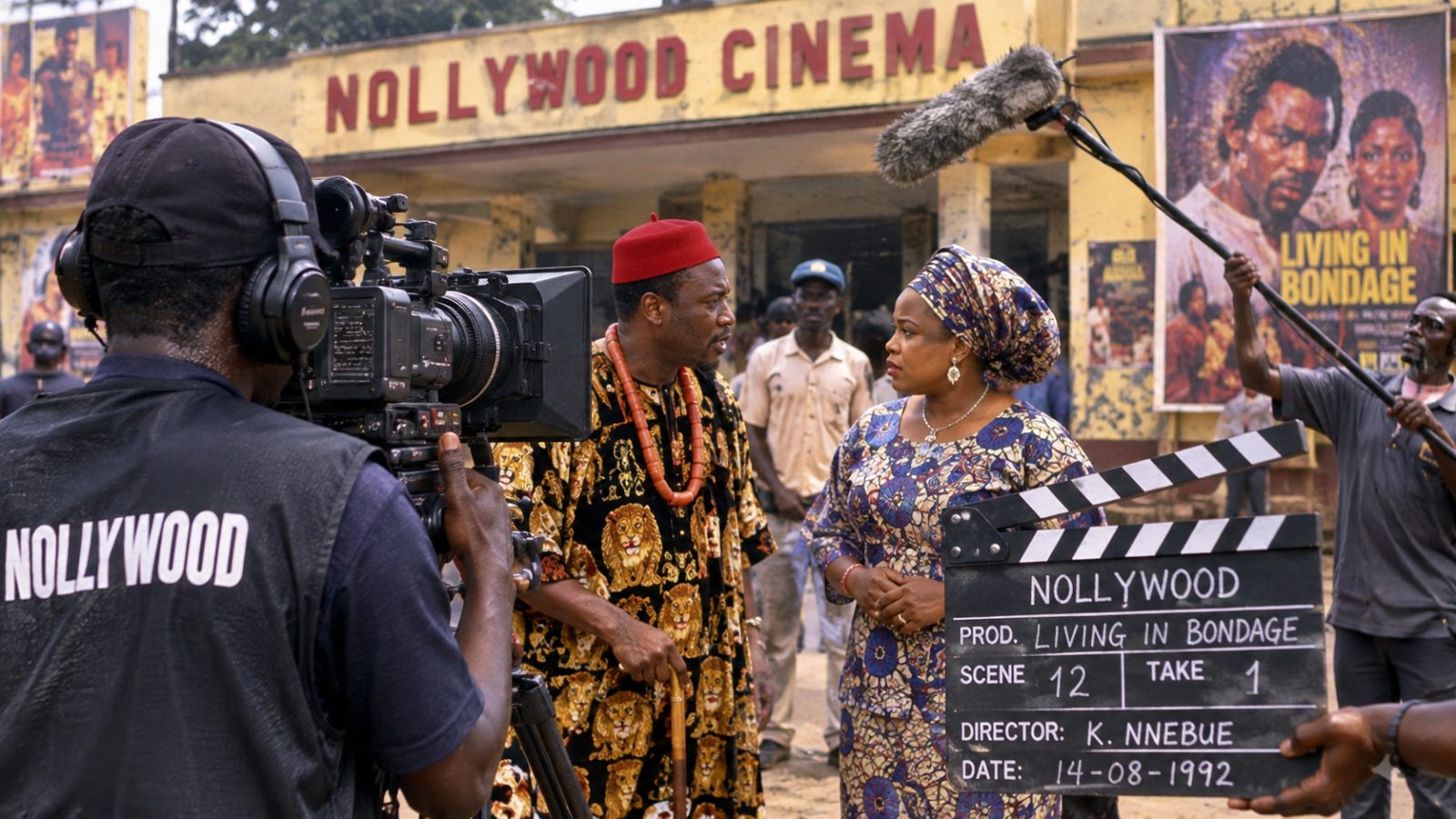
One notable example is Living in Bondage (1992), produced by Kenneth Nnebue. The film is widely recognised as a major turning point in the growth of Nigeria's commercial home-video industry.
However, the debate should not be reduced to a competition between ethnic groups. Nollywood's development involved the contributions of filmmakers, actors, producers, distributors, theatre practitioners and investors from different parts of Nigeria.
Owoh's clarification therefore provides an opportunity to examine the industry's history more carefully and recognise the different contributions that shaped its growth.
As discussions continue, the veteran actor's remarks have renewed public interest in the origins of Nigerian cinema and the importance of preserving its historical achievements. Rather than creating divisions, the conversation should encourage appreciation of the diverse cultural influences that have made Nollywood one of Africa's most recognised film industries.
Sources
Version 1.0. LDCP Network stories are edited before publication and updated as facts change. Spotted an error? Tell our editors.