Guide: How to check if a health alert is real
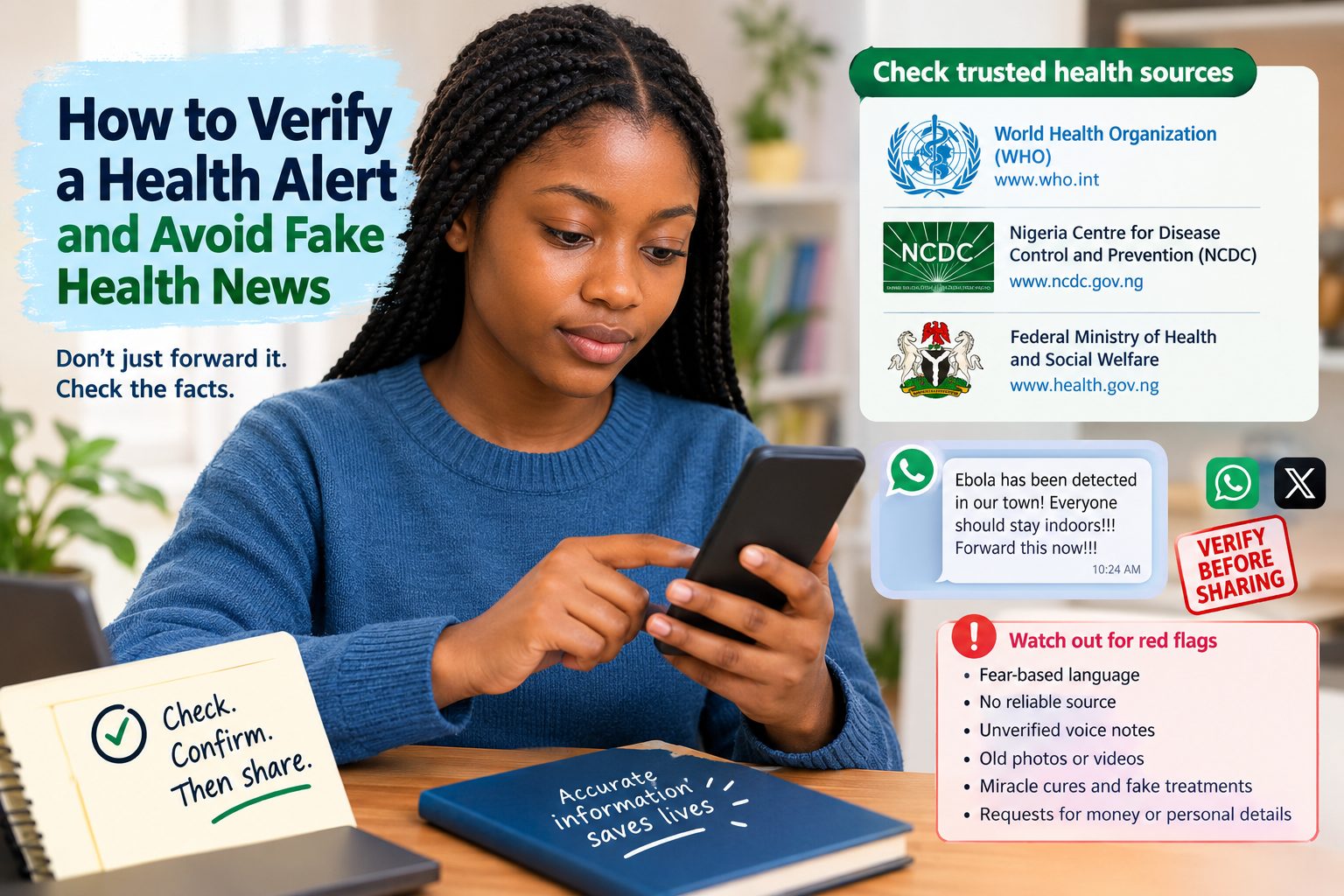
Health alerts can spread rapidly online, especially when reports about Ebola and other infectious diseases begin circulating. A frightening WhatsApp voice note or an alarming post on X can cause panic before anyone confirms whether the information is true. Knowing how to verify health alert messages helps people make informed decisions, protect their families and avoid spreading unnecessary fear.
Fake health news can encourage people to use unsafe remedies, ignore medical advice or take unnecessary precautions. Instead of immediately forwarding an alarming message, readers should check reliable sources and confirm the facts.
##Check Official Health Sources First
The fastest way to verify a health alert is to consult recognised public health authorities. The "World Health Organization (WHO)" (https://www.who.int/) publishes information about disease outbreaks, public health emergencies and recommended safety measures. Its "Disease Outbreak News page" (https://www.who.int/emergencies/disease-outbreak-news) provides updates about significant disease events around the world.
In Nigeria, the "Nigeria Centre for Disease Control and Prevention (NCDC)" (https://ncdc.gov.ng/) is an important source of information about infectious diseases and public health advisories. The "Federal Ministry of Health and Social Welfare" (https://health.gov.ng/) and relevant state health ministries can also provide updates.
For example, if a WhatsApp message claims that Ebola has been detected in a particular Nigerian state, check whether the NCDC or the relevant state health authority has published an announcement. Compare the details with official reports rather than relying on screenshots or forwarded messages.
##How to Confirm a Health Alert Quickly
A simple fake health news check can help readers avoid spreading unverified information. First, check the date. An old report about a previous outbreak may be shared again as if it happened today.
Next, identify the original source. If a post claims that WHO has issued a warning, visit the organisation's official website and look for the announcement. An official-looking logo does not automatically make a message genuine.
Compare the claims with other reliable sources. If a message describes a serious outbreak but provides no official announcement, investigate further. However, the absence of an immediate announcement does not automatically mean the claim is false, as authorities may still be investigating.
Images and videos also need careful checking. A photograph of patients in a hospital or health workers wearing protective equipment could come from another country or an earlier incident. Searching for the original image can help establish its context.
##Recognising Fake Alerts on WhatsApp and X
Ebola misinformation often spreads through messages designed to frighten people into reacting quickly. Warning signs include statements such as “Forward this to everyone immediately” or “The government is hiding the truth,” especially when no credible evidence is provided.
Unverified WhatsApp voice notes may claim to contain secret information from doctors, nurses or government officials. However, a confident speaker is not proof that the information is accurate. Check whether the speaker identifies a verifiable source and whether official authorities support the claim.
Other red flags include miracle-cure claims, requests for money for supposed emergency treatments, missing publication dates and links to suspicious websites. Never assume that a drink, herb or household product can prevent or cure Ebola simply because someone recommends it online.
These warning signs do not automatically prove that a message is false, but they indicate that further verification is necessary.
##What to Do Before Sharing a Health Alert
When you receive a suspicious message, do not forward it immediately. Check WHO, NCDC or the relevant health ministry for confirmation. If the information remains unverified, avoid presenting it as fact.
On X, examine the original account, publication date and links to supporting evidence. On WhatsApp, ask the sender where the information originated and look for an official statement before sharing it with others.
If a message appears misleading, use the platform's reporting tools where appropriate. Anyone concerned about possible exposure to a disease should contact qualified health professionals or the relevant public health authority rather than relying on social media comments or unverified remedies.
##Why Verifying Health Information Matters
False health reports can create unnecessary panic, encourage dangerous treatment decisions and weaken public trust in health authorities. Learning how to verify health alert messages helps individuals respond appropriately and prevents rumours from spreading through communities.
Before sharing a health warning, ask three questions: Who published it? When was it published? Can an official health authority confirm it?
Taking a few minutes to check the facts can prevent misinformation from reaching hundreds of other people. When health emergencies arise, sharing accurate information is just as important as taking sensible precautions.
Sources
Version 1.0. LDCP Network stories are edited before publication and updated as facts change. Spotted an error? Tell our editors.